
Note Taking Tablet for Interviews: Capture Quotes, Questions and Follow Ups
A note taking tablet can make interviews easier to manage, but the quality of the notes depends on more than how quickly you can write. When reviewing an interview days or weeks later, you need to know which words came directly from the speaker, which points are your own summaries and which details still need checking. Keeping these distinctions clear creates a reliable working record without trying to reproduce every word of the conversation.
Keep Each Note's Meaning Clear
During a live interview, there is rarely enough time to write everything down. A small set of consistent marks helps you capture important information without interrupting the conversation or losing track of what each note means.
| Note Type | Mark | What Belongs Here |
|---|---|---|
| Verbatim wording | V | A short phrase recorded word for word. Use quotation marks only when the wording is exact. |
| Paraphrase | P | The speaker's meaning, rewritten in your own words. |
| Follow-up | FU | A detail or question that still needs clarification or verification. |
| Interpretation | I | Your own analysis, rather than something the speaker directly stated. |
Prepared questions can be labelled Q1, Q2 and Q3, leaving V specifically for verbatim wording. If several people are taking part, consistent speaker labels are equally useful. A quotation may be accurate, but without knowing who said it, its value can quickly diminish when the notes are revisited.
Keep basic context with each interview, such as the date or project reference, question number, speaker and topic. These details make individual notes easier to locate when information from several conversations needs to be compared.
Leave Room for Answers You Did Not Expect
An interview page should provide structure without making the conversation feel scripted. Starting with the main questions gives you a useful reference, while leaving space underneath each prompt allows unexpected answers to receive attention too.
Imagine interviewing someone about a project's original objectives. You may discover that the most important information concerns an unexpected change in direction rather than the objectives themselves. A page containing only prewritten questions makes it harder to capture that additional context. Space for a key phrase, a short summary and a follow-up question gives you more freedom to record what actually matters.
The same approach works for journalists, recruiters and business researchers. Their questions may differ, but each needs to preserve the relationship between the prompt, the answer and any information that changes the original understanding.
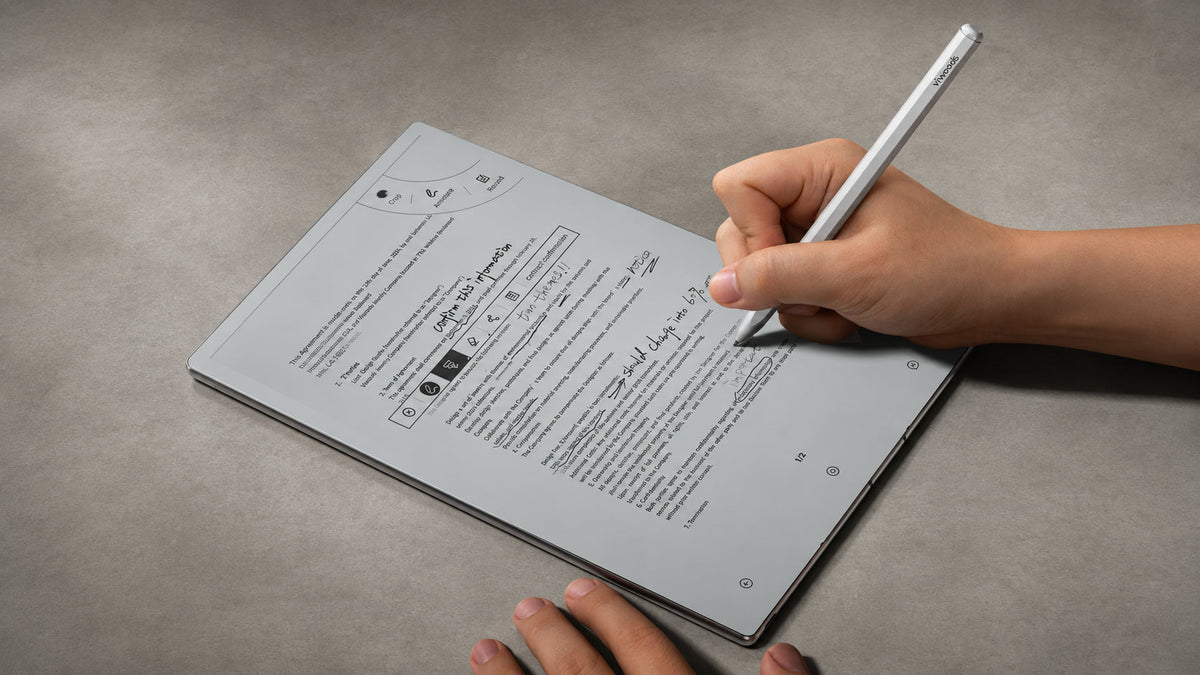
When the same interview structure is used regularly, a reusable page layout can also save preparation time. The Viwoods AiPaper digital notebook offers handwriting and custom templates that may suit this type of workflow. A consistent template gives you a familiar place for question references and follow-up notes while leaving enough room to adapt to the conversation.

Handwritten note-taking on the Viwoods AiPaper digital notebook.
Record Exact Phrases, Not Reconstructed Quotes
Not every sentence needs to be recorded word for word. In most interviews, it is more useful to capture phrases whose wording could change how an answer is understood. These might include a commitment, a qualification, a distinctive description or a statement that could later be quoted.
Small words can make a substantial difference. Terms such as "may", "only", "not" and "approximately" affect the meaning or certainty of a statement. Leaving them out when summarising an answer can unintentionally make the speaker sound more definite than they were.
Consider this hypothetical example from an interview about a project delay:
Q2 — What caused the delay?
V — "We did not receive final approval until June."
P — Final approval was not received before June.
I — The approval timing may have affected the launch schedule, but this has not been established.
FU — What was the exact date of approval, and did it change the planned launch date?
Each line has a different purpose. The quotation preserves the speaker's wording, the paraphrase makes the main point easier to review, and the interpretation identifies a possible implication without presenting it as an established fact. The follow-up then gives you a specific question to investigate.
If you did not capture the original wording accurately, a paraphrase is safer than reconstructing a quotation from memory. This distinction matters when interview notes are later used in published articles, research findings or recruitment decisions. A summary should preserve what the speaker meant without making the statement sound stronger or more certain than it was.
Mark Uncertain Details While the Conversation Is Fresh
Names, dates, figures and technical terms are easy to mishear, particularly when a conversation moves quickly. A brief note such as "VERIFY: product model" is more useful than leaving an unexplained question mark beside the information.
Numbers deserve particular attention. If a speaker mentions a figure that could be 15 or 50, record the uncertainty rather than choosing whichever sounds more likely. The original recording, a supporting document or a direct clarification may help establish the correct value later.
Not every uncertainty needs to interrupt the interview. If asking for clarification would break the speaker's train of thought, leave a follow-up mark and return to the question at a natural pause or after the conversation. This keeps the discussion flowing without allowing unclear information to disappear from the record.
A speaker's statement is an attributed claim, not automatically a verified fact. Important dates, figures and other factual details may still need documentary checks or independent corroboration before they are used elsewhere.
Separate the Speaker's Account From Your Interpretation
When reviewing interview notes, it is easy for an initial impression to become mixed with what the speaker actually said. This often happens when a short summary combines someone's explanation with the interviewer's assumptions about why something happened.
For example, "P: approval took longer than expected" records a summary of the speaker's account. "I: responsibility for approval may have been unclear" expresses a possible interpretation. The second statement might be worth investigating, but it should not be attributed to the interviewee without supporting evidence.
This distinction becomes particularly important when several interviews contribute to the same research project. Different participants may describe the same event from different perspectives. Keeping their statements separate from your own interpretation makes it easier to compare accounts without introducing assumptions into the original information.
Interviews also rarely exist in isolation. You may need to compare what someone said with reports, documents or handwritten research notes collected earlier. Keeping each observation connected to its original source makes that process easier. The guide to organising research notes and tracking sources explores how to keep this information accessible across different materials.
Make Follow-up Questions Specific
The value of an FU mark becomes clearer after the conversation. Rather than leaving several question marks scattered throughout the page, review them while the interview sequence is still familiar and identify what each one needs to resolve.
- Ask the speaker to clarify wording, scope or a missing example.
- Check a date, name or figure against a relevant document.
- Compare an important claim with another source.
- Record who is responsible for obtaining the missing information and when it is expected.
The wording of a follow-up matters. "Can you explain the launch?" leaves considerable room for another broad answer. "Did the June date refer to internal approval or public release?" identifies the uncertainty and makes it easier to obtain a useful response.
Keep each follow-up beside the original answer so its context remains clear. A separate list of unanswered questions may seem convenient, but without a reference to the relevant speaker and prompt, it can become difficult to understand why a particular question was raised.
When you return to the notes, quotations should still be traceable to their speakers, paraphrases should remain clearly distinguishable from direct statements, and unresolved details should have a clear next step. This makes the notes useful long after the interview has ended, particularly when several conversations contribute to a larger report or decision.
Choose a Writing Space That Does Not Interrupt the Conversation
The writing space matters because an interview requires attention in two directions: listening to the speaker and recording information accurately. A page that is difficult to navigate or crowded with prompts can pull your attention away from the conversation. A simpler layout with enough room for handwritten notes is often more practical.
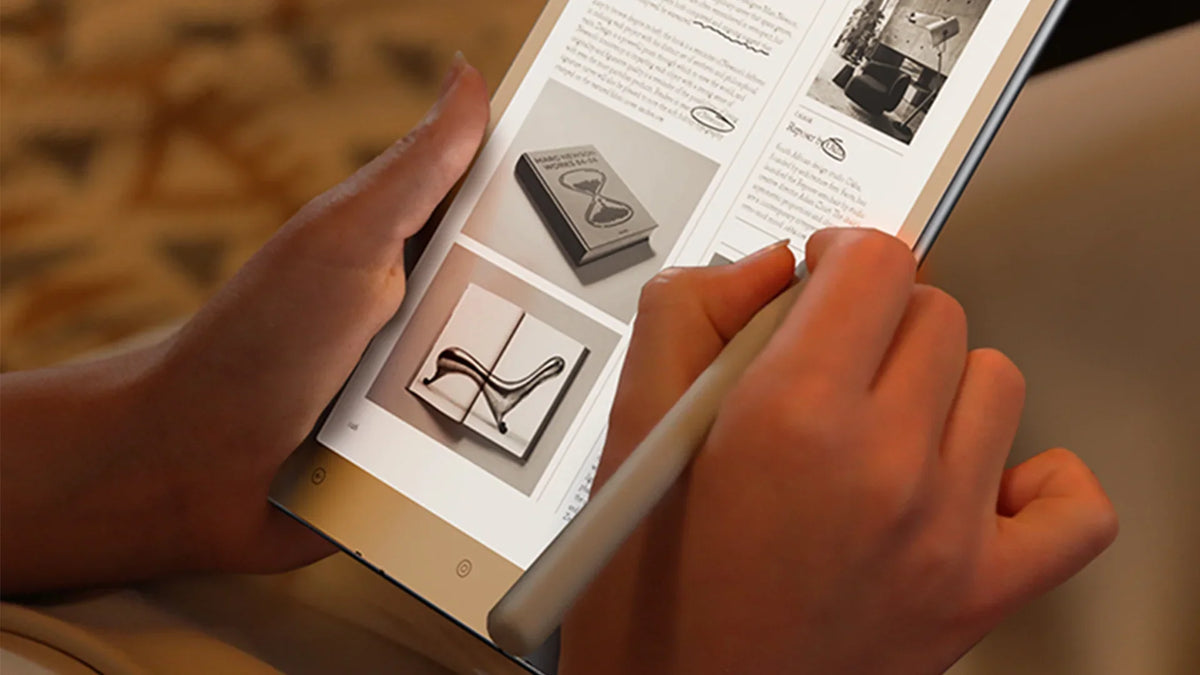
The Viwoods AiPaper digital notebook also includes highlighting and tags, which can help when reviewing handwritten pages later. Highlighting makes important passages easier to locate, while tags provide another way to group notes from different interviews within the same project.

Close-up of handwritten note-taking on the AiPaper digital notebook.
Paper can still be a comfortable choice for a short conversation, especially when using a device would distract from listening. A digital notebook may be more convenient for repeated interviews where handwritten pages need to be revisited and grouped by project. The better choice depends on the interview setting, the volume of notes and the way you prefer to organise your work.
Privacy also matters when interviews involve confidential information. Let participants know how their information will be used and obtain consent where required. Access, storage, sharing and retention should follow the organisation's data-handling policy, whether the notes are written on paper or stored digitally.
For interviewers who prefer handwriting and reusable page layouts, the Viwoods AiPaper digital notebook is worth exploring. Its handwriting and custom-template features offer a way to organise recurring interview notes while keeping the writing process familiar.


Leave a comment
This site is protected by hCaptcha and the hCaptcha Privacy Policy and Terms of Service apply.